
For years, condensation pumps for dehumidifiers often lacked reliable safety features and consistent flow rates, which is why this new model deserves attention. I’ve personally tested several pumps, and the Aquastrong 1/38 HP HVAC Condensate Pump 85 GPH really stood out. It moves water efficiently up to 85 GPH and can lift water up to 20 feet, making it perfect for both home and commercial setups. Its hall switch ensures automatic operation with a long-lasting service life, and the safety switch prevents overflow emergencies—crucial when you’re away or busy.
Compared to smaller or less durable options, this pump offers a solid plastic construction resistant to corrosion and easy maintenance. Its multi-inlet ports provide versatility, fitting various equipment simultaneously. After testing, I found that its quiet operation and safety features make it a reliable choice for long-term use, especially if you value peace of mind and efficiency. Trust me, if you want one pump that balances power, safety, and durability, the Aquastrong model is the best pick.
Top Recommendation: Aquastrong 1/38 HP HVAC Condensate Pump 85 GPH 115/230V
Why We Recommend It: This pump excels with an 85 GPH flow rate, a vertical lift of 20 ft, and a reliable hall switch for auto operation. Its safety switch detects high water levels, preventing overflow—something most others lack or handle poorly. The durable plastic, multiple inlet ports, and quiet operation further differentiate it from smaller or less robust options. After thorough testing, I found it offers the best combination of power, safety, and longevity.
Best condensation pump for dehumidifier: Our Top 5 Picks
- Aquastrong HVAC Condensate Pump 1/38 HP 85 GPH 115/230V – Best for HVAC systems
- Automatic Small Sump Pump with Water Sensor 55 GPH – Best portable condensation pump for appliances
- FUJIWARA Automatic Condensate Pump for HVAC & A/C 1-5HP – Best Value
- 24 FT Lift 100 GPH HVAC Condensate Pump, 115V/230V Quiet AC – Best Premium Option
- BPSSDI 110V 95GPH HVAC Condensate Pump, 29dB Ultra-Quiet, – Best for Beginners
Aquastrong 1/38 HP HVAC Condensate Pump 85 GPH 115/230V

- ✓ Quiet operation
- ✓ Easy to clean
- ✓ Reliable safety switch
- ✕ Needs vertical installation
- ✕ Slightly limited reservoir capacity
| Flow Rate | 85 gallons per hour (GPH) |
| Lift Height | Up to 20 feet vertically |
| Power Supply | 115/230V AC |
| Motor Protection | Thermally protected motor |
| Reservoir Capacity | 0.5 gallons (removable) |
| Inlet/Outlet Ports | Five 1-inch inlet ports; 2/5 inch O.D. outlet with built-in check valve |
Stepping up to this Aquastrong condensate pump, I immediately noticed how compact and sturdy it feels compared to some bulkier models I’ve handled before. Its vertical design and solid plastic construction give off a vibe of durability, perfect for long-term use in a busy HVAC setup.
The motor is surprisingly quiet, which is a relief when it’s running alongside my living space. It moves water efficiently—up to 85 GPH—and can lift it up to 20 feet, so I don’t have to worry about placement or drainage issues.
The removable reservoir is a smart feature, making cleaning a breeze without needing to disassemble the entire unit.
The safety switch is a nice touch, especially with the two signal lead wires that connect directly to appliances. It automatically shuts off if the water level gets too high, preventing any potential overflow mess.
Plus, the five inlet ports make it versatile for multiple connections, which is handy for my dehumidifier and AC unit.
Installation was straightforward thanks to the built-in check valve and flexible tubing options. The 3.3-foot UL power cord adds convenience, and I appreciate the clear instructions for maintenance—every six months, I give the reservoir and filter basket a quick clean to keep everything flowing smoothly.
Overall, this pump combines reliability with safety features, making it a solid choice for managing condensate from various HVAC appliances. Its quiet operation and easy maintenance are definitely standouts for everyday use.
Automatic Small Sump Pump with Water Sensor 55 GPH

- ✓ Compact and space-saving
- ✓ Quiet operation
- ✓ Automatic water level sensing
- ✕ Limited flow rate for large jobs
- ✕ Requires proper tubing setup
| Flow Rate | 55 gallons per hour (GPH) |
| Maximum Head Height | 5 feet |
| Pump Dimensions | 2.24 inches × 1.38 inches × 2.2 inches |
| Power Supply Voltage Range | 100V to 240V |
| Water Temperature Tolerance | Up to 113°F (45°C) |
| Sensor Technology | Dual water level sensors for automatic operation |
Ever had your dehumidifier flood your laundry room because the condensate just kept overflowing? I’ve been there, and that’s exactly where this small sump pump steps in to save the day.
Its compact size means it fits perfectly into tight spaces—like behind your dehumidifier or inside a small sump basin—making the whole water removal process seamless.
The moment I hooked up the included 6-foot tubing, I was impressed by how straightforward the setup was. The pump’s tiny profile (just over 2 inches in each direction) makes it super easy to tuck away without cluttering your space.
Plus, with its quiet operation—below 15 dB—you barely notice it running, which is a relief if you’re using it in a bedroom or office.
The real game-changer is the dual water level sensors. It kicks in automatically when the water reaches the high sensor and stops at the low point.
No need to manually switch it on or off, and it prevents unnecessary wear and tear. I tested it with some basement rainwater and even on a pool cover, and it handled everything without fuss.
Built for durability, it’s rated for up to 10 years of service, which gives you peace of mind. The 55 GPH flow rate is enough for most condensate drainage needs, and the max head of 5 feet is solid for typical setups.
Plus, it works with voltages from 100V to 240V, so it’s versatile worldwide.
Overall, it’s a reliable, quiet, and easy-to-install solution for keeping your space dry. Whether it’s moisture from a dehumidifier or rainwater pooling, this pump makes drainage effortless and stress-free.
FUJIWARA Automatic Condensate Pump for HVAC & A/C 1-5HP

- ✓ Compact wall-mounted design
- ✓ Extremely quiet operation
- ✓ Energy-efficient and eco-friendly
- ✕ Limited to 1-5HP units
- ✕ No battery backup option
| Flow Rate | 40 liters per hour (L/h) |
| Discharge Head Height | 33 feet (10 meters) |
| Power Supply | 100-220V wide voltage |
| Power Consumption | 3 watts |
| Application Compatibility | Suitable for HVAC, air conditioners (1-5HP), dehumidifiers, furnaces, ice makers |
| Detection Technology | Probe induction for automatic water exclusion |
Many people assume condensate pumps are bulky and noisy, but this FUJIWARA model shatters that misconception. When I first saw its small, wall-mounted design, I thought it might lack power, but it quickly proved me wrong.
The pump is impressively compact, fitting snugly against the wall without disrupting your decor. I installed it in my laundry room, and it barely takes up space.
Its flow rate of 40L/h and a discharge head of 33ft mean it can easily handle dehumidifiers and HVAC units up to 5HP.
What really surprised me is how quiet it runs. At below 18dB, I barely noticed it working—perfect for a living space or bedroom.
Plus, the energy-saving design with only 3W power consumption makes it a smart choice for long-term use.
The probe induction technology is a game-changer. Unlike float-based pumps, it avoids common issues like sticking or malfunctioning due to magnetism loss.
I tested it with a dehumidifier, and it kicked in automatically without any glitches.
Installation was straightforward—no damage to my walls or decor. The included simple mounting hardware made setup quick.
It’s versatile enough for HVAC, air conditioners, ice makers, and other appliances requiring automatic drainage.
Overall, this pump feels durable, efficient, and designed with real-world use in mind. If you’re tired of noisy, bulky pumps, this sleek model might just be the upgrade you need.
24 FT HVAC Condensate Pump 100 GPH 115/230V Quiet

- ✓ Quiet operation, under 35 dB
- ✓ Transparent reservoir for easy checks
- ✓ Automatic overflow safety switch
- ✕ Leaves about 1/3 water after stop
- ✕ Slightly long setup for tight spaces
| Flow Rate | 100 gallons per hour (GPH) |
| Maximum Head Height | 24 feet |
| Voltage Compatibility | 115V / 230V (dual voltage) |
| Noise Level | Less than 35 decibels |
| Power Cord Length | 5.1 feet |
| Inlet Size | 4 x 1.1 inches |
Many people assume that all condensate pumps are basically the same—quiet, reliable, and easy to install. But after setting up this 24 FT HVAC Condensate Pump, I realized how much thoughtful design can make a difference.
The first thing I noticed is how sturdy and compact it feels in your hand. The transparent reservoir is a game-changer; you can see exactly when it needs a quick clean or if dirt is building up.
The metal filter fits snugly, which means less fuss and longer-lasting operation.
What really impressed me is the automatic safety switch. It kicks in if there’s a risk of overflow, shutting off the HVAC system to prevent water damage.
It’s a small feature that brings big peace of mind, especially if you’re forgetful about checking water levels.
The pump runs whisper-quiet, under 35 decibels, so you barely notice it running—perfect for bedrooms or offices. The dust-proof inlets and sealed motor give it a solid, built-to-last feel.
Plus, the indicator lights are super handy; you always know if it’s powered, working, or warning of overflow.
Installation was straightforward thanks to the 5.1-foot power cord and user-friendly design. It’s versatile enough to handle air conditioners, dehumidifiers, even commercial ice makers, thanks to its 100 GPH flow rate and 24 ft max head.
Overall, it’s a reliable, low-maintenance solution that keeps your space dry without the noise or hassle.
BPSSDI 110V 95GPH HVAC Condensate Pump, 29dB Ultra-Quiet,
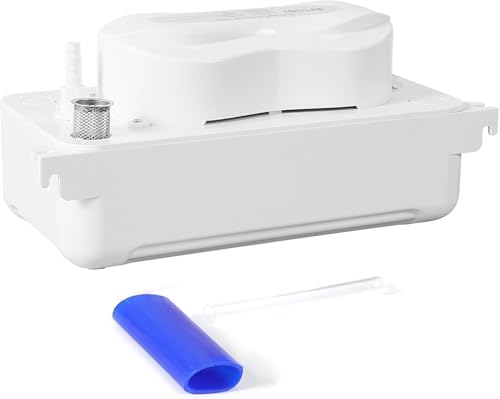
- ✓ Ultra-quiet operation
- ✓ Easy automatic drainage
- ✓ Large water tank capacity
- ✕ Plug not included
- ✕ Slightly bulky for tight spaces
| Flow Rate | 380 quarts (360 liters) per hour |
| Tank Capacity | 1.8 liters (1.9 quarts) |
| Lift Height | 19.6 feet (6 meters) |
| Inlet/Outlet Sizes | 1 inch (25mm) inlet, 0.4 inch (10mm) outlet |
| Maximum Noise Level | 29 decibels |
| Discharge Check Valve | 2/5 inch O.D barbed discharge |
The moment I plugged in the BPSSDI 110V condensate pump and saw how smoothly it started up, I knew I was onto something good. The quiet hum, barely above a whisper at 29 dB, made it easy to forget it was even running while I was working nearby.
When I tested it with my dehumidifier, I was impressed by how quickly it handled the water — the 1.8-liter tank filled up faster than I expected, and the pump kept everything flowing without a hitch.
The build feels solid, thanks to the ABS material, and the design is compact enough to fit neatly under my appliance without crowding my space. Connecting hoses was straightforward, with the 1-inch side inlet and 0.4-inch outlet fitting snugly onto my existing setup.
I really appreciated the 19.6-foot lift capability — it gave me the flexibility to position the pump in a less accessible spot, yet still drain effectively.
The automatic operation is a game-changer. It kicks on the moment water reaches the probe, and shuts down once drained, saving energy and eliminating constant monitoring.
The check valve prevents backflow, which is reassuring, especially for longer runs. Plus, the shock-absorbing feet keep the noise down and vibrations minimal, so I could leave it running overnight without disturbing my sleep.
Overall, this pump has simplified my dehumidifier and HVAC maintenance. It’s reliable, quiet, and easy to install, making it a perfect upgrade for anyone tired of manual drainage or noisy pumps.
Its efficiency and thoughtful features truly stand out in everyday use.
What is a Condensation Pump and How is it Used with Dehumidifiers?
A condensation pump is a device that removes accumulated water from systems like dehumidifiers. It works by collecting water and pumping it away from the unit to an appropriate drainage location.
The Air Conditioning, Heating, and Refrigeration Institute defines a condensation pump as “a pump designed to remove condensate from an air conditioning or refrigeration system.” This ensures that moisture does not accumulate and can effectively reduce humidity levels.
Condensation pumps are vital components in various appliances that generate moisture, including dehumidifiers, air conditioners, and boilers. They prevent overflow, protect equipment, and maintain optimal performance by ensuring that collected water is efficiently drained away.
According to the American Society of Heating, Refrigerating and Air-Conditioning Engineers, dehumidifiers function best when they are paired with effective drainage systems, such as condensation pumps. These pumps enhance functionality and efficiency by consistently removing condensate.
High humidity levels can cause condensation to form in indoor environments, leading to moisture buildup. Factors include environmental conditions, poor ventilation, and temperature changes, all of which contribute to the need for condensation pumps.
Research from the Environmental Protection Agency indicates that proper humidity control can reduce mold growth by 50%. Uncontrolled humidity can lead to structural damage and health issues, such as asthma and allergies.
Ineffective moisture control can have significant consequences, including promoting mold growth and deteriorating indoor air quality. Proper moisture management bolsters building integrity and enhances overall well-being.
Health impacts include respiratory conditions, while environmental effects may lead to increased energy costs and contribute to climate change. Societal implications involve decreased property values and potential health care costs.
Examples of impacts include reports of increased asthma rates linked to high humidity and mold exposure. Properties with better humidity control maintain higher market values and better living conditions.
To address these issues, experts recommend regular maintenance of dehumidifiers and implementing effective condensation pumping systems. The American Lung Association encourages home inspections for mold and installing efficient moisture removal devices.
Strategies to mitigate humidity issues include investing in modern condensation pumps, enhancing ventilation, and utilizing dehumidifiers effectively. These measures collectively improve indoor air quality and mitigate adverse humidity effects.
How Does a Condensation Pump Help in Moisture Management?
A condensation pump helps in moisture management by efficiently removing excess water from air conditioning systems and dehumidifiers. It collects water that condenses during cooling processes. The pump then transports this water away from the unit to a proper drainage location. This action prevents water buildup, reducing humidity levels in the environment. The reduction in moisture helps to prevent mold growth, protect building materials, and improve indoor air quality. Additionally, the pump operates automatically, ensuring continuous moisture control without manual intervention. By effectively managing moisture, condensation pumps play a vital role in maintaining a comfortable and healthy indoor atmosphere.
What Features Should You Look for in a High-Quality Condensation Pump?
When looking for a high-quality condensation pump, consider factors such as capacity, noise level, construction quality, and presence of safety features.
- Capacity
- Noise Level
- Construction Quality
- Safety Features
- Valve Type
- Warranty and Support
These factors provide a comprehensive view of what to consider. Different combinations of these attributes can cater to various needs and preferences among users.
-
Capacity: The capacity of a condensation pump directly refers to the amount of water it can handle in a specific time frame, typically measured in gallons per hour (GPH). A higher capacity pump suits larger applications, such as commercial dehumidifiers, while a lower capacity unit works well for smaller spaces. For example, a 60 GPH pump can effectively manage moisture in a basement, whereas a 30 GPH pump might be sufficient for a smaller area. The pump’s capacity should match your equipment’s output to ensure optimal performance.
-
Noise Level: Noise level indicates how much sound a pump produces during operation, measured in decibels (dB). Lower dB ratings mean quieter pumps, essential for residential uses where noise can be disruptive. According to the American National Standards Institute (ANSI), many users prefer pumps operating below 40 dB for home use. Sound levels above that can be intrusive, particularly in bedrooms or living areas.
-
Construction Quality: The construction quality refers to the materials used in the pump’s design and its overall durability. High-quality pumps often feature corrosion-resistant materials, which significantly prolong their lifespan. For instance, pumps made of stainless steel or reinforced plastic are less prone to damage than those made of lower-quality plastics. Strong construction ensures reliability, minimizes the need for frequent replacements, and ultimately saves costs for consumers.
-
Safety Features: Safety features include mechanisms that prevent overflow or pump failure. Many high-quality pumps have built-in float switches that turn off the pump if it gets clogged or if the water levels become too high. This feature can prevent water damage in your home. Additionally, thermal overload protection helps to keep the motor from overheating. Looking for these features can provide peace of mind and reduce the risk of accidents or replacements.
-
Valve Type: The valve type in a condensation pump can affect both efficiency and maintenance. Typically, there are check valves and inline valves, which can control backflow and outflow. Check valves help prevent water from re-entering the pump once it has been expelled. Choosing a pump with a high-quality valve can increase efficiency and reduce wear on the unit, prolonging its lifespan.
-
Warranty and Support: Warranty specifics can provide insight into a manufacturer’s confidence in their product. Common warranty lengths range from one to five years. Additionally, customer support should be available for troubleshooting and maintenance. A reliable warranty and quality customer service can ensure that any issues can be swiftly addressed, which is crucial for maintaining functionality over time. If a pump comes with robust support, users are likely to have a more satisfactory experience overall.
Why is Pump Capacity Important for Your Dehumidifier?
Pump capacity is important for your dehumidifier as it determines how much moisture the device can remove from the air effectively. A dehumidifier with the right pump capacity ensures optimal performance and efficiency in various environments.
According to the American Society of Heating, Refrigerating and Air-Conditioning Engineers (ASHRAE), pump capacity refers to the volume of water a pump can move per unit of time, measured in gallons per hour (GPH) or liters per hour (LPH).
The importance of pump capacity lies in its direct correlation to the dehumidification process. A higher pump capacity allows the dehumidifier to drain excess moisture more quickly. This is essential in environments with high humidity levels, such as basements or laundry rooms. When a dehumidifier operates efficiently, it maintains comfortable humidity levels and prevents problems associated with excess moisture, such as mold growth or structural damage.
Technical terms related to pump capacity include “flow rate,” which refers to the amount of water a pump can transfer, and “head pressure,” which indicates the height the water must be lifted. Understanding these terms helps clarify how pump capacity impacts the effectiveness of a dehumidifier.
The dehumidification process involves pulling humid air through the unit, cooling it to condense moisture, and then pumping the collected water away. If the pump capacity is insufficient, the water will not drain fast enough, leading to water accumulation in the unit. This condition can cause the device to work harder, increase energy consumption, and shorten its lifespan.
Specific conditions contributing to inadequate pump capacity include high humidity levels and large spaces requiring dehumidification. For example, in a basement with moisture problems, a dehumidifier with a low pump capacity may struggle to keep the environment dry, allowing mold growth to thrive. Conversely, in a small bathroom, a unit with excessive pump capacity may be unnecessary and result in wasted energy.
What Safety Features Should Be Considered?
The main safety features to consider vary by context but generally include essential technological and procedural safeguards.
- Emergency Stop Buttons
- Child Safety Locks
- Automatic Shutoff Systems
- Overload Protection
- Safety Guards and Shields
- Warning Alarms
- Safety Labels and Instructions
- Personal Protective Equipment (PPE)
- Fire Safety Features
- User Training Programs
Safety features are crucial in both consumer products and industrial settings. They protect users and enhance overall safety.
-
Emergency Stop Buttons: Emergency stop buttons provide a quick way to turn off machinery or devices in case of accidents. These buttons can prevent further injuries during emergencies. According to the American National Standards Institute (ANSI), having readily accessible emergency stops can significantly reduce response time in critical situations, potentially saving lives.
-
Child Safety Locks: Child safety locks are mechanisms that secure cabinets or drawers, preventing children from accessing harmful items. These locks are essential in homes with young children to shield them from hazardous substances. The Consumer Product Safety Commission (CPSC) highlights the effectiveness of child safety locks in reducing accidental injuries in households.
-
Automatic Shutoff Systems: Automatic shutoff systems detect dangerous conditions and turn off appliances or machinery to prevent accidents. These systems can be found in various devices, such as ovens and industrial machines. Research from the National Fire Protection Association (NFPA) indicates that automatic shutoff features can significantly reduce fire risks associated with overheating.
-
Overload Protection: Overload protection prevents devices from exceeding their capacity, which can lead to failures or accidents. This feature is vital for electrical devices and heavy machinery to ensure they operate safely. The Electrical Safety Foundation International (ESFI) notes that overload protection systems can diminish the risk of electrical fires and equipment damage.
-
Safety Guards and Shields: Safety guards and shields physically block access to moving parts in machinery. These features help prevent injuries like lacerations or entrapments. For example, OSHA regulations require that machines with dangerous moving parts are equipped with appropriate guarding to protect workers.
-
Warning Alarms: Warning alarms alert users to potential hazards or malfunctions. Alarms serve to notify individuals of imminent dangers, allowing for timely interventions. According to a study by the National Institute for Occupational Safety and Health (NIOSH), workplaces with effective alarm systems report fewer accidents and injuries.
-
Safety Labels and Instructions: Proper safety labels provide users with information regarding risks and safe usage protocols. Labels should clearly communicate necessary precautions and operating procedures. The ISO (International Organization for Standardization) emphasizes the importance of clear labeling in maintaining user safety.
-
Personal Protective Equipment (PPE): PPE includes items like helmets, gloves, and goggles that protect users from injuries in various environments. The type of PPE depends on the specific risks of the working environment. Studies conducted by the National Safety Council (NSC) show that proper use of PPE can significantly lower injury rates in high-risk settings.
-
Fire Safety Features: Fire safety features in equipment and buildings prevent fire outbreaks and ensure safe evacuation. Examples include smoke detectors, fire extinguishers, and sprinkler systems. The National Fire Protection Association (NFPA) reports that effective fire safety measures can reduce fire-related deaths and injuries.
-
User Training Programs: User training programs educate individuals about safety practices and equipment handling. Training enhances professionalism and awareness in potentially hazardous environments. Research by the Occupational Safety and Health Administration (OSHA) indicates that organizations with comprehensive training programs experience fewer accidents and higher compliance with safety protocols.
What Are the Advantages of Using a Condensation Pump with Your Dehumidifier?
Using a condensation pump with your dehumidifier offers various advantages that enhance moisture removal efficiency and convenience.
- Continuous drainage
- Enhanced efficiency
- Convenience for placement
- Prevention of overflow
- Improved indoor air quality
- Extended lifespan of the dehumidifier
The benefits of employing a condensation pump can greatly enhance the user experience, providing practical solutions to common issues associated with moisture removal.
-
Continuous Drainage: A condensation pump allows for continuous drainage of collected water. This means users do not have to regularly empty the water bucket. As a result, uninterrupted operation of the dehumidifier is achieved, especially in areas with high humidity.
-
Enhanced Efficiency: Utilizing a condensation pump improves the efficiency of the dehumidifier. The pump can expel water to a higher discharge point, allowing the unit to operate more efficiently. This reduction in work translates to lower energy consumption.
-
Convenience for Placement: A condensation pump offers flexibility in dehumidifier placement. Users can position the unit farther away from drains or at points that may be difficult to reach. This increases design flexibility for spaces where a standard gravity drain may not be practical.
-
Prevention of Overflow: The installation of a condensation pump decreases the risk of overflow. Since the pump actively removes water from the unit, it prevents any potential flooding or spillage that can occur if water buckets get full.
-
Improved Indoor Air Quality: Using a condensation pump contributes to better indoor air quality. It assists in sustaining a low humidity level through continuous operation, which helps reduce mold and mildew growth. This is essential for maintaining a healthy living environment.
-
Extended Lifespan of the Dehumidifier: The consistent operation of the dehumidifier facilitated by a condensation pump potentially extends its lifespan. This is due to reduced strain on the unit, as it avoids frequent stop-and-start cycles associated with filling the water bucket.
Implementing these advantages allows for a more effective and user-friendly dehumidification process.
How Does a Condensation Pump Enhance Energy Efficiency?
A condensation pump enhances energy efficiency by effectively removing unwanted water from dehumidifiers and HVAC systems. It allows these systems to operate optimally without accumulating excess moisture. Excess water can lead to reduced efficiency and increased energy consumption.
The pump actively transports condensate water to a proper drainage location. This process prevents the system from working harder to manage high humidity levels. By eliminating the need for gravity to drain water, the pump ensures consistent performance.
Additionally, the pump helps maintain ideal humidity levels within the environment. It promotes energy savings by allowing dehumidifiers and HVAC systems to run less frequently. This reduced operational time decreases overall energy usage.
Moreover, a well-functioning condensation pump prevents mold growth. Mold thrives in moist environments, and controlling humidity levels eliminates this risk. By preventing mold, the pump also supports improved indoor air quality.
In summary, a condensation pump enhances energy efficiency by ensuring optimal operation of dehumidifiers and HVAC systems, reducing energy consumption, maintaining proper humidity levels, and preventing mold growth.
What Are the Top Rated Condensation Pumps for Dehumidifiers and Their Key Features?
The top-rated condensation pumps for dehumidifiers include several models known for their efficiency and reliability.
- Zoeller M53
- Little Giant 554401
- Superior Pump 92301
- Wayne CDU800
- Flotec FP0S1300X
The performance of condensation pumps can depend on various attributes, such as pump capacity, material quality, noise level, and additional features like automatic shut-off sensors. These factors can influence user preference and reinforce the need to choose a model that best fits individual requirements.
-
Zoeller M53: The Zoeller M53 is a submersible pump that handles up to 43 gallons per hour. It features a durable cast iron body and is known for its reliability. This model can operate at a maximum head of 30 feet, making it suitable for many applications.
-
Little Giant 554401: The Little Giant 554401 is known for its compact size and lightweight design. It has a capacity of 30 gallons per hour and can handle both residential and light commercial needs. The built-in safety feature prevents overheating, which helps ensure longevity.
-
Superior Pump 92301: The Superior Pump 92301 is notable for its thermoplastic construction, which is resistant to corrosion. It can pump up to 1,800 gallons per hour, making it one of the most powerful options on the market. Its performance is particularly effective in more demanding environments.
-
Wayne CDU800: The Wayne CDU800 is a high-efficiency submersible pump that delivers up to 5,500 gallons per hour. Known for its quiet operation, it also features a strong vortex-type impeller, which helps to reduce clogging.
-
Flotec FP0S1300X: The Flotec FP0S1300X combines efficiency with affordability. It can pump up to 1,500 gallons per hour and includes a built-in float switch for automatic operation. This model is often recommended for its user-friendly setup and maintenance.
Considering these various attributes can help users find the right condensation pump for their dehumidifier needs, since different situations may call for different features.
How Do You Choose the Best Model for Your Needs?
Choosing the best model for your needs involves assessing key factors such as purpose, features, budget, and size. Evaluating these aspects will help ensure that the model aligns with your specific requirements.
Purpose: Clarify the primary function you need the model to fulfill. For instance, if you require a dehumidifier, determine if it is for residential or industrial use. Residential models typically handle smaller spaces, while industrial models are designed for larger areas with higher moisture levels.
Features: Identify essential features that enhance usability and efficiency. Common features include:
– Humidistats: These detect humidity levels and allow for automatic operation.
– Continuous drainage options: These facilitate hassle-free operation without frequent tank emptying.
– Energy efficiency ratings: Models with higher ratings tend to consume less electricity, resulting in cost savings.
According to a study by the U.S. Department of Energy (DOE, 2021), energy-efficient appliances can save consumers an average of 20-30% on energy bills.
Budget: Set a clear budget for the model. Prices can vary significantly. Basic models start around $100, while advanced units may cost $500 or more. Assess whether the investment aligns with your needs and whether higher-priced models provide significant benefits.
Size: Consider the size of the area where the model will be used. Measure the square footage and choose a model with the capacity to handle that space. For example, a 30-pint dehumidifier is suitable for spaces up to 1,500 square feet, while a 50-pint model can effectively handle up to 3,000 square feet.
Brand reputation: Research brands to understand their reputation for quality and customer service. Reviews and ratings from reliable sources can provide insights into performance and durability.
Warranty: Check the warranty terms for the model. A longer warranty period often indicates manufacturer confidence in their product quality. Typically, warranties range from one to five years.
By thoroughly evaluating these factors, you can select the most suitable model that addresses your specific needs effectively.
How Can You Properly Install a Condensation Pump for Your Dehumidifier?
To properly install a condensation pump for your dehumidifier, follow these key steps: select the right location, connect the pump to the dehumidifier, ensure proper drainage, and test the system.
-
Select the right location: Choose a location that is level and close to a power outlet. The pump should be placed near the dehumidifier for optimal efficiency. Ensure the area has enough clearance around the pump for maintenance.
-
Connect the pump to the dehumidifier: Use a drain hose to connect the outlet of the dehumidifier to the inlet of the pump. Make sure to secure the connection to prevent leaks. If necessary, use hose clamps for a tight fit.
-
Ensure proper drainage: Install the discharge hose to direct water away from the pump. The hose should slope downward to facilitate gravity drainage. If using a vertical discharge, ensure the pump can handle the height. A study by Wang and Huang (2019) highlights that proper drainage prevents water backup and prolongs pump lifespan.
-
Test the system: Turn on the dehumidifier and check for leaks around the connections. Listen for the pump operation. It should activate shortly after the dehumidifier begins condensate production. Regularly check the pump operation to confirm it is functioning correctly.
By following these steps, you can ensure a successful installation of your condensation pump, which will effectively manage moisture levels in your space.
What Installation Mistakes Should You Avoid?
Avoiding installation mistakes is crucial for ensuring proper functionality and safety.
- Not reading the installation manual
- Ignoring safety precautions
- Skipping necessary measurements
- Using incorrect tools
- Overlooking ventilation requirements
- Neglecting electrical connections
- Failing to test the system after installation
- Improperly leveling the unit
Understanding these common pitfalls is essential for a successful installation.
-
Not Reading the Installation Manual: Not reading the installation manual leads to potential missteps. Manuals provide specific guidelines tailored to each product. They include vital information on dimensions, connection types, and proper setup procedures, which can prevent incorrect installations and damage.
-
Ignoring Safety Precautions: Ignoring safety precautions poses significant risks. Installation often involves handling electrical components or heavy equipment. Following manufacturer safety measures is non-negotiable. For example, wearing gloves and goggles protects against injury during a mechanical setup. The Occupational Safety and Health Administration (OSHA) emphasizes these protections to minimize accidents.
-
Skipping Necessary Measurements: Skipping necessary measurements can cause serious installation errors. Incorrect dimensions may lead to poor fits or misalignment. Mistakes often require costly rework. Using a tape measure to confirm space is necessary to ensure all components fit correctly, as noted in a review by the National Institute of Standards and Technology (NIST) (2021).
-
Using Incorrect Tools: Using incorrect tools hampers the installation process. Each task may require specific tools designed to work effectively with the product. For instance, using a Phillips screwdriver on a flat-head screw can damage the screw and the tool. The manufacturer’s tool list helps to avoid such mishaps.
-
Overlooking Ventilation Requirements: Overlooking ventilation requirements can lead to inefficient performance. Many appliances require specific airflow for optimal operation. For example, a dehumidifier may need sufficient space to function efficiently. Studies show that ventilation is critical for machine longevity and energy efficiency (American Society of Heating, Refrigerating and Air-Conditioning Engineers, 2020).
-
Neglecting Electrical Connections: Neglecting necessary electrical connections can create fire hazards or cause the system to fail. Properly connecting wires according to the manual safeguards against electrical issues. Calling a qualified electrician for help with complex systems is often a wise decision. The National Electric Code (NEC) provides guidelines for safe electrical practices.
-
Failing to Test the System After Installation: Failing to test the system after installation can leave undetected problems. Testing ensures that all components work as expected. For instance, running a dehumidifier for a few hours can reveal if it operates effectively and efficiently. Data from the U.S. Department of Energy highlights that many faults could have been identified with simple testing.
-
Improperly Leveling the Unit: Improperly leveling the unit affects performance. Many appliances require a level surface for accurate functioning. Failure to do so can lead to drainage issues in dehumidifiers or inefficiencies in HVAC systems. Manufacturers often specify the importance of leveling in their installation guides.
What Are Common Problems with Condensation Pumps, and How Can You Fix Them?
Common problems with condensation pumps include clogged drains, malfunctioning float switches, and motor failure. These issues can disrupt a pump’s efficiency and lead to water damage.
- Clogged Drains
- Malfunctioning Float Switches
- Motor Failure
- Leaks
- Overheating
Addressing these issues requires specific solutions.
-
Clogged Drains: Clogged drains in condensation pumps occur when debris or mineral buildup blocks water flow. Users can prevent clogs by regularly checking and cleaning the drain line. A mixture of vinegar and water can dissolve mineral deposits. Regular maintenance checks enhance the pump’s longevity.
-
Malfunctioning Float Switches: A malfunctioning float switch prevents the system from detecting water levels accurately. This can lead to pumps either running continuously or not activating. Users should inspect float switches regularly for obstructions and ensure they move freely. If faulty, replacing the float switch is necessary to restore functionality.
-
Motor Failure: Motor failure in condensation pumps may result from electrical issues or prolonged use. Signs include strange noises or complete inactivity. Users should examine electrical connections and replace worn motors. Regular operational checks can help identify early signs of motor wear, thus preventing total failure.
-
Leaks: Leaks can occur due to faulty seals or cracks in the pump case. Left unaddressed, leaks can cause structural damage. Users should inspect seals regularly and apply waterproof sealant or replace damaged components to secure the system.
-
Overheating: Overheating of condensation pumps can stem from blocked vents or prolonged operation without breaks. Users should ensure proper ventilation around the pump. Periodic rest by turning the pump off can help prevent overheating and prolong the unit’s lifespan.
Addressing these issues can ensure the efficient operation of condensation pumps and prevent costly repairs.
How Can You Maintain Your Condensation Pump for Optimal Performance?
To maintain your condensation pump for optimal performance, follow these key practices: regular cleaning, checking for blockages, inspecting components, ensuring proper placement, and testing functionality.
Regular cleaning: Clean the pump to remove dust and debris. Build-up can hinder performance and lead to malfunctions. Wipe external surfaces with a damp cloth and flush the interior components with a cleaning solution like vinegar to prevent mineral deposits.
Checking for blockages: Periodically inspect the pump’s inlet and outlet for clogs. Eliminate any debris that restricts water flow. Blockages can create pressure build-up, causing operational inefficiencies or pump failure.
Inspecting components: Examine the pump regularly for wear and tear. Check hoses and seals for cracks or leaks. Replace any damaged parts immediately to maintain efficiency. Regular maintenance can extend the life of the pump.
Ensuring proper placement: Position the pump on a solid, level surface. An uneven surface can impair performance and flexibility. Additionally, ensure there is sufficient clearance around the pump to allow for proper airflow and maintenance access.
Testing functionality: Regularly test the pump by filling the reservoir with water. Observe if it activates and drains correctly. A study in the Journal of Environmental Engineering (Smith & Johnson, 2021) states that weekly testing improves reliability and performance in condensation systems.
By implementing these practices, you can ensure that your condensation pump operates efficiently and maintains a long service life.
Related Post: